【Secretly】
Ms. Osawa was 17 years old when she became fascinated by the yokoburi (hand-guided) embroidery machine and embarked on the path of an embroidery artisan. She became an apprentice at a nearby embroidery shop and continued to learn embroidery techniques while surrounded by over a dozen senior female workers.
However, it was not only embroidery techniques that she learned. The dozen or so yokoburi machines frequently malfunctioned. Each time, a sewing machine technician was called in to perform repairs. For the other workers, the time their machines were being repaired was free time, a release from their difficult work. They would do as they pleased while waiting for the repairs to be completed.
Ms. Osawa was different. She watched the technician's repairs with rapt attention. What do they look at when such a breakdown occurs? What needs to be done to make it run well again? The girl who loved tools, as it turned out, loved machinery just as much. Moreover, the machines being repaired were the very yokoburi machines she intended to dedicate her life to. She wanted to fully master their mechanisms, movements, and repair methods. Sewing machine breakdowns were the ultimate learning opportunities.
Within half a year, she had the repair procedures memorized. Ms. Osawa began repairing her own machine. Calling in a professional technician took time. If they were busy, it might be two or three days before they arrived. During that time, she couldn't do the embroidery she loved so much. If she fixed it herself, the downtime would be much shorter!
"I did it secretly so no one would know. After all, everyone around me was my senior. After two months, I had already surpassed my seniors in both the quality of my embroidery and the number of pieces I could finish. If I also started repairing my own machine on top of that, I would have caused them to lose face, and at worst, I might have been bullied."
Not only had Ms. Osawa become a skilled embroidery artisan, but she had also become a sewing machine technician working in secret.
【Love for the Sewing Machine】
At 19, Ms. Osawa resigned from the embroidery shop and became independent. She remodeled a part of her home and installed ten connected yokoburi sewing machines. Two workers from her previous workplace followed her. The president was her father, Touzaburo. Ms. Osawa took on the roles of factory manager, technical director, and embroidery artisan.
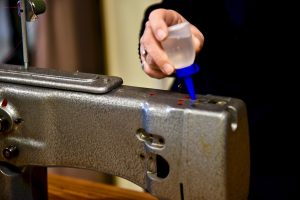
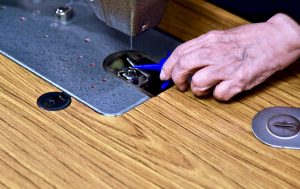
Ms. Osawa's mornings are early; she enters her workshop at 6:00 a.m. First, she meticulously sweeps the floor clean. Once that is finished, she oils every sewing machine. Sewing machines have many parts that repeat high-speed movements. If they run out of oil, metal rubs against metal, leading to unstable operation. Furthermore, this causes wear and tear on the metal parts.
"There is a saying that 'the master doesn't choose his brush,' yet is it truly logical? Wouldn't even the legendary Kobo Daishi have achieved better results with a well-maintained tool? The same goes for sewing machines. Because we are able to work thanks to these yokoburi machines, we must first keep our surroundings clean and properly maintain them. I believe this is the A, B, C of being an embroidery artisan."
Even with such careful attention, things like aging and operator errors by the workers still happen, leading to malfunctions. When that occurs, it is time for Ms. Osawa, the sewing machine artisan, to step in. She no longer needs to worry about others' eyes. Ms. Osawa began taking out the tools she had been collecting since childhood and handling all repairs she could herself.
"Before I knew it, I became able to do almost all the repairs. Oh, though I can't repair the motors that power the machines."
Currently, Ms. Osawa owns 11 yokoburi sewing machines. She bought her oldest one when she was 33, meaning she has been using it for half a century. As for the other ten, she says,
"They are all old."
They have their surroundings swept clean every day, receive oiling, and even if they fall into poor condition, they are immediately repaired. The yokoburi machines, enveloped in Ms. Osawa's love, must surely be savoring their happiness.
【Repairs】
The part of a sewing machine most prone to breakdown is the hook. As it continues to work day after day, the screw fixing the hook loosens, causing its position to shift. If it starts colliding with the needle, the needle will break. She opens the cover to expose the hook, carefully lowers the needle to gauge the extent of the misalignment, returns it to the correct position, and tightens the screw firmly.
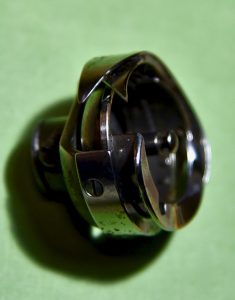
"It might sound simple when I say it like that, but every sewing machine has its own quirks. I suspect it's probably because of the user's specific habits, but the 'correct' position varies from machine to machine. That's a subtlety that professional sewing machine technicians often find hard to grasp."
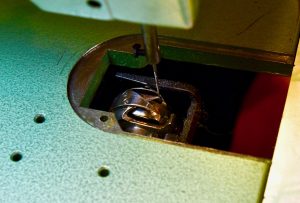
Sometimes, the tip of the hook gets damaged. The tip is a crucial part that enters the looped needle thread to interlock it with the lower thread. This likely happens because the fabric pulls the needle in one direction while being moved back and forth and side to side under the needle, causing it to collide with the tip. When this tip is damaged, the upper and lower threads fail to interlock properly.
'So, do I replace the hook? No, I don't do that. I polish the tip using fine-grit sandpaper. Since I am sanding down metal with sandpaper, it takes a significant amount of time, and because it's such a small area, my fingers get tired. But, it is my sewing machine, after all.'
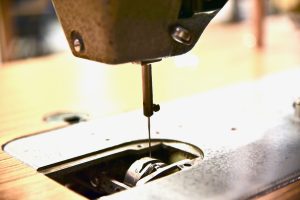
The needle bar that holds the needle can also shift out of alignment, likely because the needle sometimes collides with the hook. It can shift upward, and occasionally, even sideways.
"Look, the needle holes on Dai-chan's machine were scattered, weren't they? That was because the needle bar had shifted sideways," she explained.
The sewing machine stand can become warped. As noted in the "Part 1", the weight of the machine can sometimes even cause the floor itself to warp. In such cases, she inserts rubber or cardboard under the legs of the machine stand to level it, utilizing her built-in spirit level.
"As far as I know, there aren't many artisans who worry about things to that extent,"
She noted.
The world of Ms. Osawa, the sewing machine artisan, extends beyond just repairs. To make the machines even easier to use, she has even created parts that do not exist in the world, such as a device to apply tension to the upper thread.
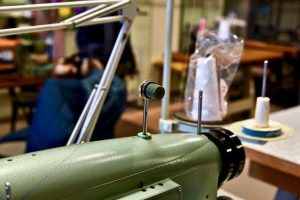
However, there was one difficulty in using it while still in the "cheese" wound state. With a standard sewing machine, the amount of upper thread used is constant. But with a yokoburi machine, the amount of thread used varies depending on the needle's swing width. If you broaden the swing width and suddenly pull out a large amount of thread, the momentum causes extra thread to be pulled out as well, leading to tangles.
"So, I thought I should just adjust the tension of the upper thread."
Ms. Osawa made her own tension adjustment device using materials she had on hand (photo). She is now more than just a sewing machine technician.
【To the Next Generation】
As the domestic textile industry declines, the number of artisans continues to drop. There was a time when there were several yokoburi sewing machine manufacturers, but now there is only one. Sewing machine technicians have also decreased significantly.
"That's why I believe that if you want to work with yokoburi machines from here on out, you have to be able to do your own repairs."
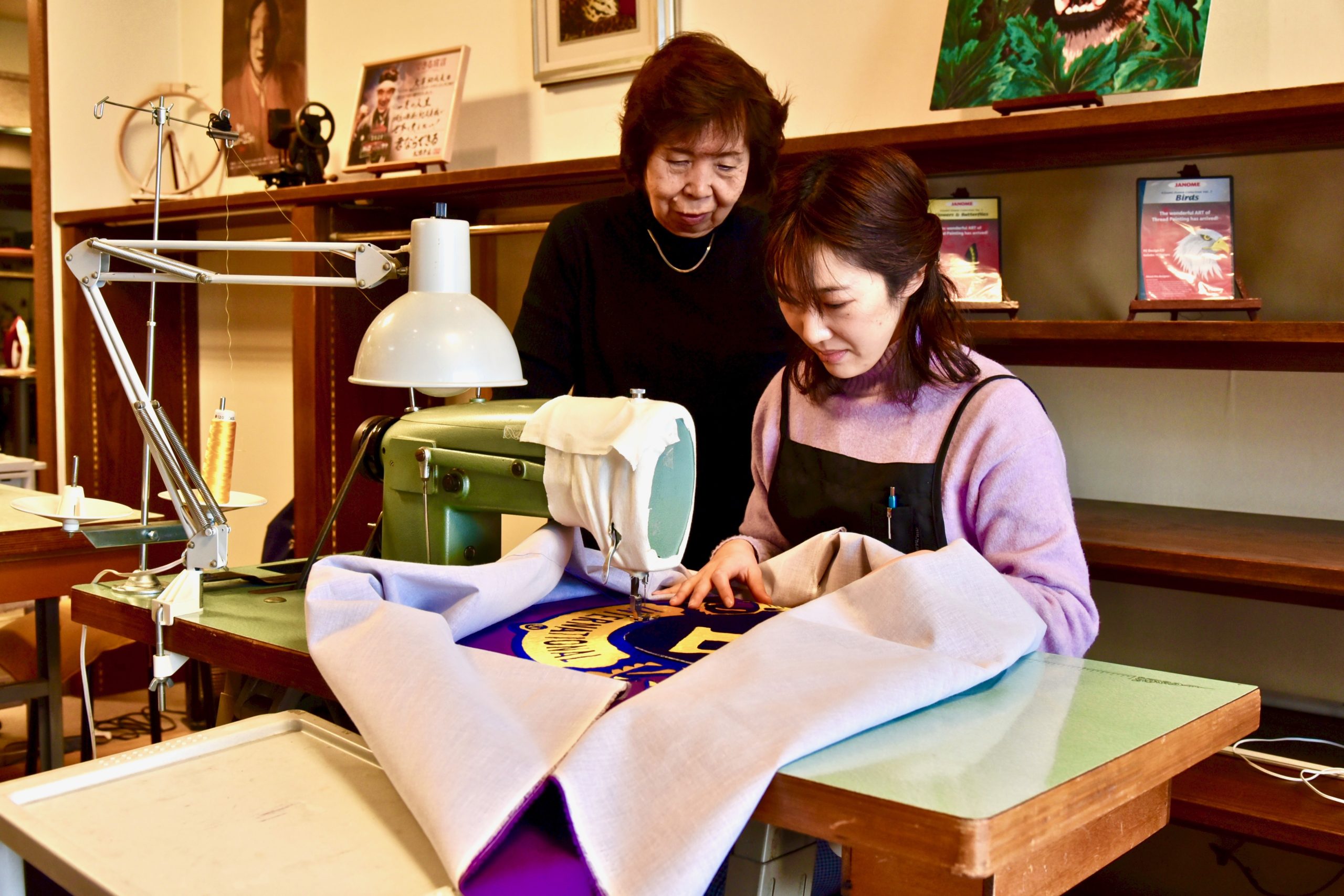
Even now, Ms. Osawa, who has six apprentices, wants to teach them not only the art of embroidery but also about the yokoburi machine. How to attach the needle correctly, the relationship between the needle and the hook, how to adjust the thread tension… The Osawa Embroidery Class must also serve as a training center for sewing machine technicians.
"If you cannot take care of your own machine, do not call yourself an embroidery artisan!"
Ms. Osawa continues to convey that message.

コメント