【Dobuita Street】
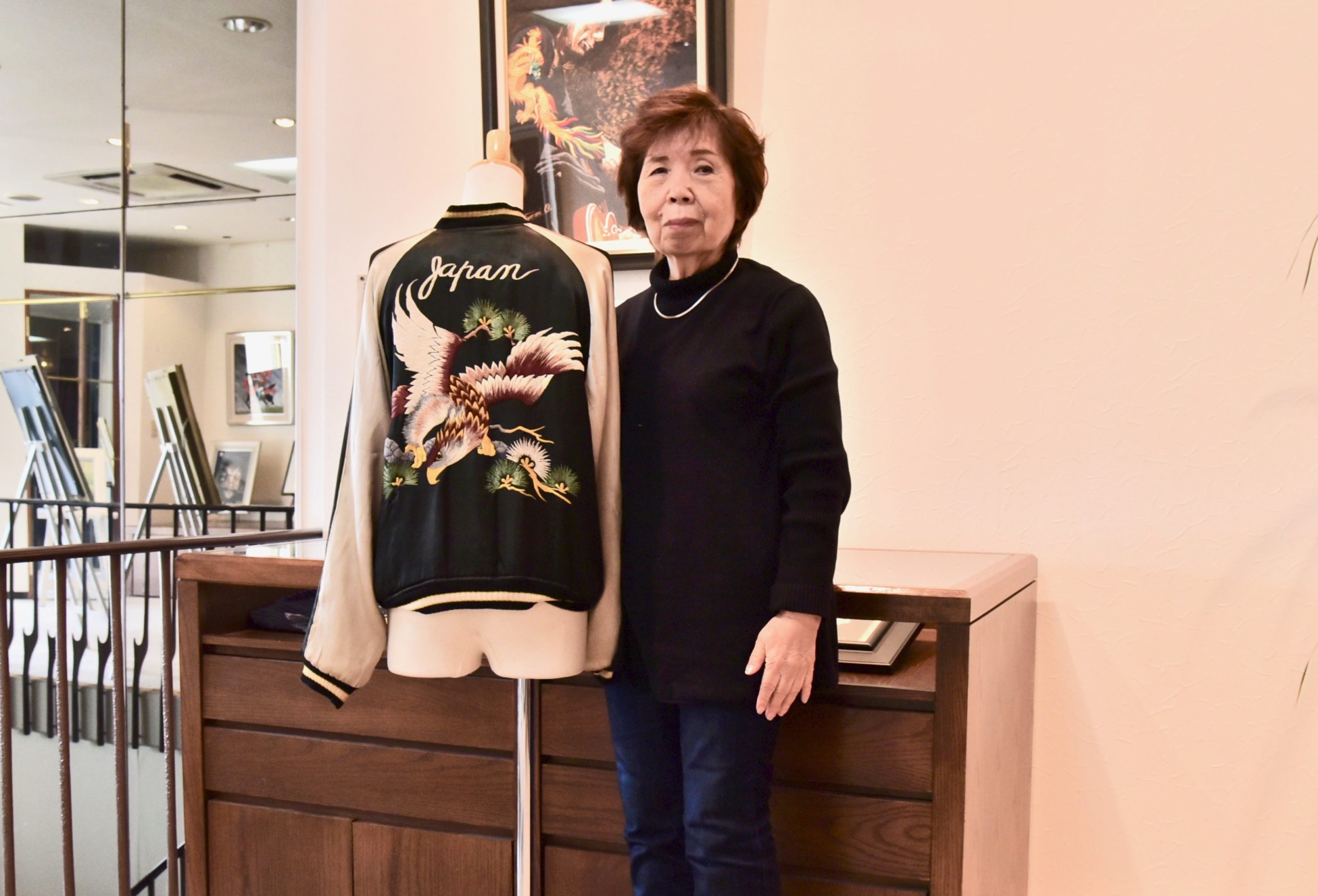
In November 2022, I visited the Yokosuka Museum of Art with Ms. Osawa, where a “Sukajan Exhibition” was being held.
“Sukajan” is an abbreviation for “Yokosuka Jumper” (Yokosuka Jacket). It is said to have originated shortly after World War II, when U.S. military personnel stationed at the U.S. Naval Base in Yokosuka had jumpers embroidered with Japanese-style motifs such as eagles, tigers, and dragons, as well as designs representing their own units and base symbols. Subsequently, sales to the general public began on Dobuita Street in Yokosuka, and its popularity skyrocketed. The “Sukajan Exhibition” gathered successive generations of these jackets in one place.
The reason we made a special trip to this “Sukajan Exhibition,” which at first glance seemed to have no connection to Kiryu or Ms. Osawa, was that a “Kiyomi Osawa Corner” had been set up in one corner of the venue, displaying works that Ms. Osawa had loaned at the museum’s request.
Ms. Osawa’s works are not Sukajan; they are standard embroidery. So why were they displayed at a “Sukajan Exhibition”?
“You see, even though they were called Sukajan, most of them were actually sewn in Kiryu. Back then, there were many people in Kiryu who did embroidery on kimono, and Sukajan were perfect for training new artisans. We sewed quite a few in my factory., too.”
Although the name is Sukajan, they were “Made in Kiryu.” You cannot discuss Sukajan without mentioning Kiryu. And when it comes to embroidery in Kiryu, there is no one else but Kiyomi Osawa. That was the museum’s conclusion.
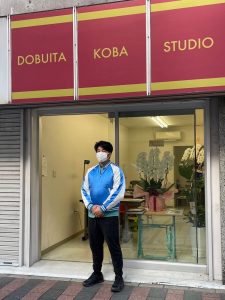
After touring the museum, we extended our trip to Dobuita Street, the mecca of the sukajan (souvenir jacket). A young man who had trained for three years in yokoburi (hand-guided) embroidery under Ms. Osawa was in the process of preparing to open a sukajan shop there called “Dobuita Koba Studio.” We call him “Dai-chan” (Daisuke Yamashita).
As soon as she entered the shop, Ms. Osawa began to speak.
“Dai-chan, this sewing machine is difficult to sew with, isn’t it? Do you happen to have some paper?”
Ms. Osawa placed the paper down and operated the machine.
“Look, you can see multiple needle holes, can’t you? In reality, the needle should be falling into the exact same spot.”
Indeed, small needle holes were scattered over a narrow area.
“Do you have a flathead screwdriver?”
Taking the screwdriver that Dai-chan brought out, Ms. Osawa removed the hook. She also removed the needle and performed some adjustments.
“If you adjust this part a little more like this, the balance improves. Try running it now. See? The sound has changed, hasn’t it?”
Indeed, the sound, which had been somewhat muffled until Ms. Osawa intervened, became clear.
Rushing to a shop opened by her former apprentice, she first adjusted the sewing machine. That is the kind of person Ms. Osawa is.
“Because, to do good embroidery, you have to get the sewing machine to move properly. An embroidery artisan certainly needs embroidery skills, but equally, they must become a sewing machine artisan who is knowledgeable about the machines, capable of maintaining and repairing them.”
With the yokoburi sewing machine that Ms. Osawa tuned up, Dai-chan must be sewing wonderful sukajan right about now.
【Tools】
Young Ms. Osawa was an unusual girl. Her playmates were all boys. Moreover, she was a ringleader who treated the boys as her subordinates and bossed them around. She had absolutely no interest in playing house or with dolls, which were considered girls’ pastimes.
Even so, there were people who would bring her dolls, saying,
“Because you’re a girl.”
Ms. Osawa would pay no mind to the dolls and would begin sewing clothes for them.
“I didn’t care about the dolls themselves. But I liked sewing clothes for them myself and playing dress-up.”
Shortly after the war, her older brother, who had returned from the battlefield, started an automobile repair shop nearby.
“I loved that factory. You know how automobile factories have tools like pliers, screwdrivers, locking pliers, and wrenches hanging on the wall? Even when I was not yet of elementary school age, when I saw those, I would be captivated and forget the time, thinking, ‘Ah, how beautiful.’ It’s strange, isn’t it?”
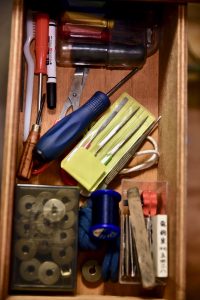
There was one thing that the girl, who did not want dolls or toys for playing house, collected: tools. For her birthday and Christmas, she would beg her parents for tools: pliers, screwdrivers, nippers, wrenches, files, hammers…
She packed these tools into a toolbox so large she could barely carry it in her arms. Once she had them, there was only one thing for a child to do.
“I took apart everything I could see in the house, one after another.”
She was six or seven years old when she dismantled the German-made clock her father cherished. She became absorbed in using the tools. Before long, parts were strewn messily across her desk: screws, gears, mainsprings, hands, the dial…
“I was able to take it apart. But I was only six or seven, after all. There was no way I could put it back together, right?”
Just as she finished the disassembly, her father walked into the room.
“Oh no, I’m going to get in trouble!”
She instinctively hunched her shoulders. However, her father only made a sour face and left the room.
“Seeing that expression, I reflected that this was something I shouldn’t do.”
She did reflect. However, she still had a collection of tools that even adults would envy at her fingertips.
“I kept doing it after that, too. Alarm clocks, bicycles—there were fewer machines in our house that didn’t fall victim to me.”

Ms. Osawa, who once even considered becoming an architect, always kept her toolbox close by even as she grew up. When she was in junior high school, she saw her mother struggling because the family sewing machine was not working properly and declared,
“I’ll fix it.”
Finding that the cause of the malfunction was the pin spring that adjusts the upper thread tension and successfully repairing it was her very first job as a sewing machine artisan.
Photograph: Ms. Osawa displays in her gallery a sukajan that was once sewn in Kiryu.
コメント