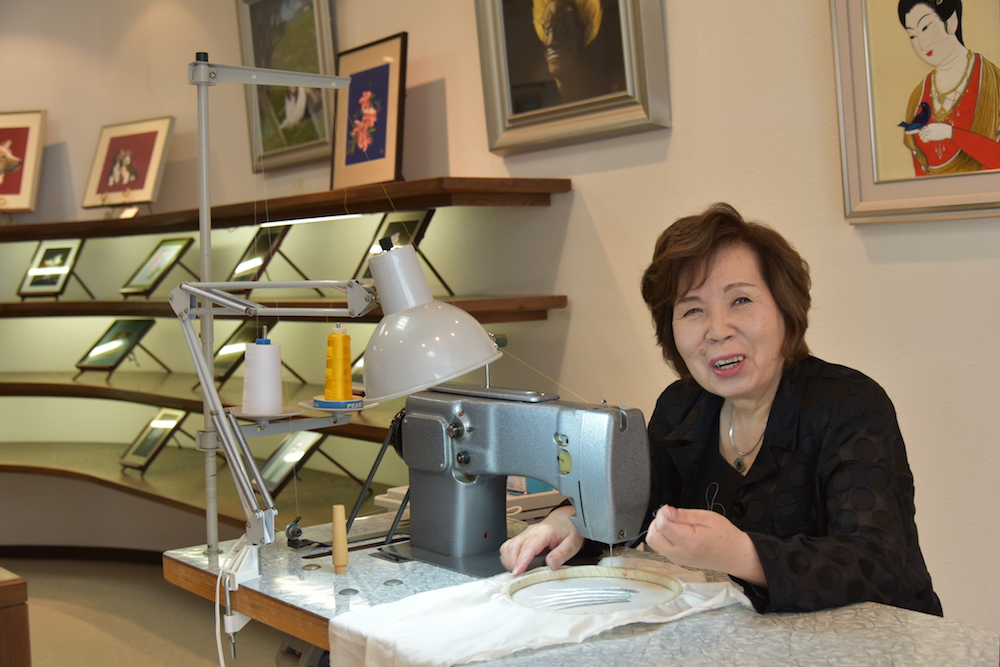
It was in 1987, shortly after her work with Khanh had concluded, that Osawa began working with fashion designer Yoshiyuki Konishi—though he might be better known today by his moniker, "Don Konishi." She had been invited to Tokyo by an acquaintance who asked,
"Why don't you go meet Mr. Konishi?"
Konishi was an up-and-coming designer who had struck out on his own in 1981, launching the "FICCE UOMO" brand and showcasing his work at the Paris and Tokyo Collections. He was not only favored in Japan by the likes of Beat Takeshi and Shinji Tanimura, but also had fans among global icons, including the rock singer Elton John.
Despite his spectacular success, Konishi was pursuing a new direction at the time. He was attempting to pivot from the knitwear he had been championing to woven fabrics.
However, while he had garnered high praise for creating diverse designs in knitwear, he was struggling with woven fabrics; he was in the midst of searching for a new design style that utilized them.
"Actually, I want to incorporate embroidery boldly into my work, but I've searched everywhere and haven't found a satisfactory embroidery artisan. I did my research and finally found you. Ms. Osawa, would you be willing to help me?"
The idea he presented was highly unconventional. He wanted to cover the entire surface of a jacket with embroidery. The concept was firm, but no embroidery artisan he had approached thus far could achieve the results he envisioned.
To cover a jacket entirely in embroidery, one must embroider the fabric before it is tailored. Since the embroidered fabric would be sewn together to create the jacket, the challenge was ensuring the embroidered patterns would align perfectly at the seams. This was something the artisans he had commissioned previously could not do.
"Ms. Osawa, I believe you are the only one who can do this."
No one else could do it. Osawa is an eternal challenger, a trait that makes her vulnerable to such words. She accepted without hesitation.
Two years later, at the Tokyo Collection, Konishi’s jacket became a major sensation. Hindu deities, Kannon Bodhisattva… stylized gods and Buddhas were embroidered on the back, the chest, and the sleeves. Konishi drew the sketches, but it was Osawa who chose the colors and finished the embroidery without even a 0.5mm deviation in the stitching.
"I heard it sold well. I was told that over 100 jackets, each costing one to two million yen, were sold."
In 1990, Kansai Yamamoto visited Osawa’s atelier in Kiryu, accompanied by several of his apprentices.
"I came because I wanted to see your work, Ms. Osawa."
After looking through her portfolio, Yamamoto said,
"Would you be willing to lend me your strength?"
He explained that he wanted to take a gamble on his next Paris Collection. It was likely a period when he had fallen into an unexpected slump and was struggling to find a way out.
He was betting his career as a designer. To win that bet, he had to present his finest work yet. He wanted to create a jacket incorporating embroidery and had been searching for an artisan who could do it.
"I haven't been able to find anyone who can stitch embroidery that matches my sensibilities. After seeing your work today, I am convinced that you, Ms. Osawa, will be able to create truly magnificent embroidery. Please, I beg you."
Osawa did not have the courage to turn down such a sincere request. She said she would accept, but with one condition.
"Please make sure to have a proper conversation with the embroidery artisans you have worked with previously. I do not want to be accused of stealing work from someone else."
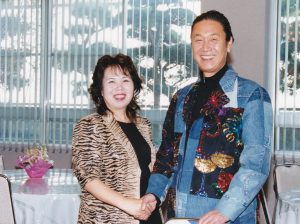
(Kansai Yamamoto and Ms. Osawa)
Before long, Yamamoto’s design was complete. It was a sketch modeled after icons—the kind that often depict Christian saints.
"What kind of embroidery do you want for this?"
Ms. Osawa asked.
Yamamoto replied,
"A golden sculpture buried in the sands of the desert, sliced right through. As for the rest, I'll leave it to you."
It was a strange, somewhat cryptic concept. Yet, Yamamoto had no further words to offer; this was the only hint she had. Ms. Osawa thought about it desperately. Gold, huh? If that was the case, she would need gold thread. But not the kind of gold thread produced in Japan, which has a deep, subtle glow—that wouldn't match the image. She would need to order gold thread from America, the kind that glitters brilliantly.
Before long, Osawa found herself preoccupied with thoughts like,
"Ah, the Paris Collection must be happening right about now. My work is probably out there on the runway."
Just then, she received an international call from Paris. As she picked up the receiver, Kansai Yamamoto’s voice burst through, filled with excitement.
"Ms. Osawa, we did it! It's a huge success!! Thank you so much."
She had taken on various projects with many designers. Among them were people like Yamamoto, who could only express their vision through mysterious, enigmatic words. Naturally, turning those visions into embroidery was a struggle.
"But you know, I really feel glad that I did it. They discovered me, and they took me to worlds I never knew. My own world has expanded."
She continues to work with designers even today. However, recently, a sense of dissatisfaction has been building in Ms. Osawa’s heart.
"There is a dearth of designers who understand embroidery. Whether they are looking down on it or simply lack study, it happens often that I want to say, 'How can you even design like that?'"
Currently, she is working with a young designer.
"Well, I should say I’m 'watching over their work' rather than working with them."
Once, her relationship with any designer she worked with was equal. But now, Ms. Osawa stands in a position of mentorship.
Bob Dylan sang, "The Times They Are A-Changin'."
The times are always shifting.
Kiyomi Osawa Gallery
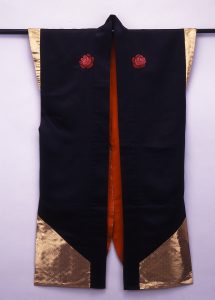
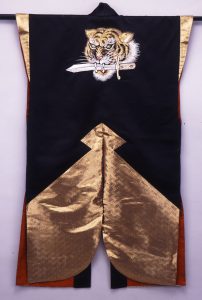
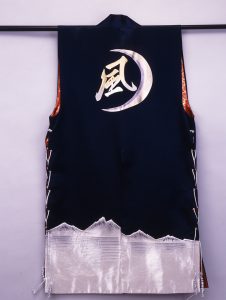
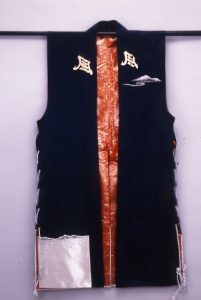
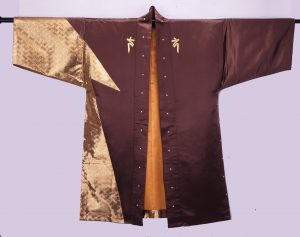
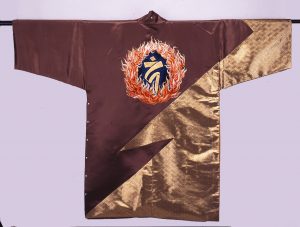
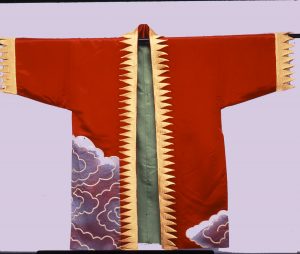
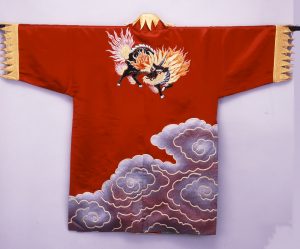
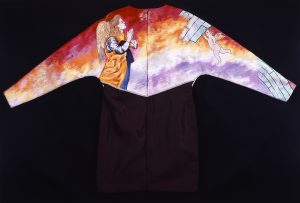
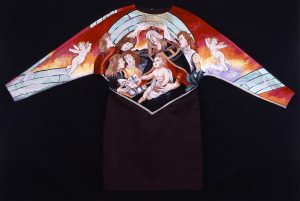
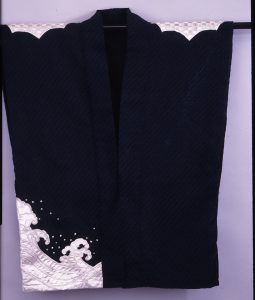
Unfortunately, Ms. Osawa does not possess photos of the embroidery commissioned by Don Konishi or Kansai Yamamoto. Therefore, I have collected pieces where Ms. Osawa applied embroidery to clothing. The top eight items are "Jinbaori" (surcoats). The ninth and tenth are called "one-piece dresses." The final piece bears the name "Thundercloud."
コメント