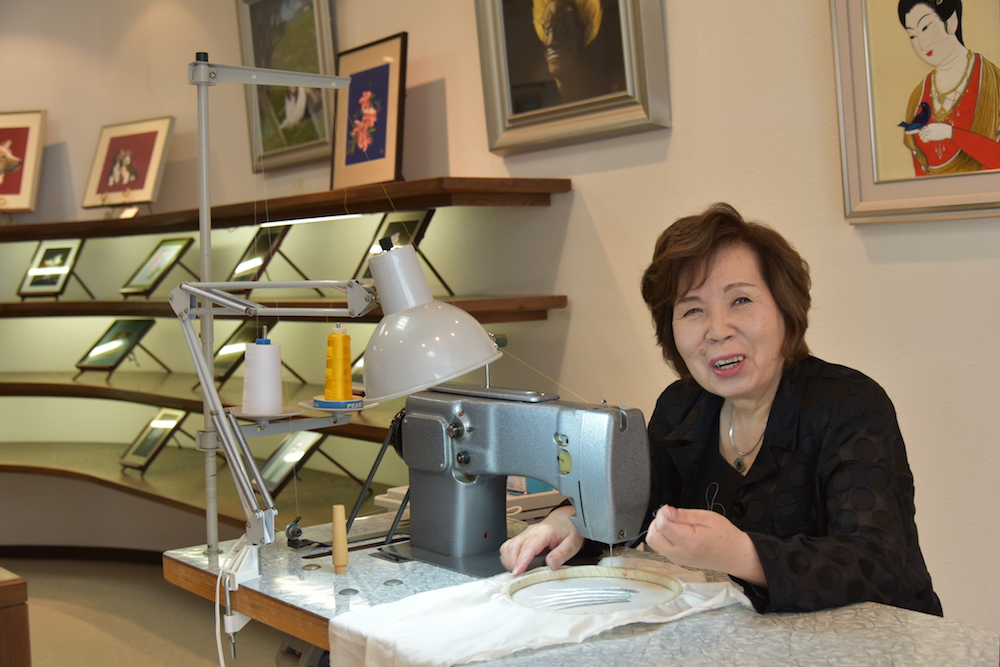
In the world of traditional Japanese crafts, it is often said that techniques are not taught, but stolen. The world Ms. Osawa entered was no different; the skills were to be snatched by watching the masters at work.
Every day was a struggle. Despite her natural talent for art, the embroidery emerging from her needle was not what she imagined. The lines were messy, and even using the same thread as her seniors, she could not capture the right colors.
"What is this tiger? Its eyes are dead."
She wondered how the senior workers were sewing, but no one would teach her.
By arriving at the workshop at 6:00 every morning to clean the room and the machines, she carefully observed her seniors and stole their techniques, continuously refining them.
Half a month after starting this mimicry, she finally produced an embroidery piece that could pass as a product. Within a month, her work was on par with her seniors. Recognizing that she had caught up and become a competitor, the seniors stopped showing her their own work.
"And then, after two months, I had overtaken them,"
She says.
She became the top worker in terms of the number of pieces finished per day.
Even when sewing the same patterns as everyone else, her work began to be praised:
"There's something different about the ones Ms. Osawa sews."
"Well, I put in the effort, you know,"
She says.
Ms. Osawa would arrive at 6:00 AM and often not return home until after 10:00 PM. After everyone else left, she would struggle alone with the sewing machine in the empty workshop, finishing her work, cleaning the room, and locking up.
On days when she couldn't embroider as she wanted, she would walk home pondering,
"Where did I go wrong?"
After dinner and a bath, she would head to bed long after the clock had passed midnight.
Her mother, Asako, later told her,
"Kiyomi-chan, you were moving your hands and feet even while groaning in your sleep last night."
She was fighting with the manual embroidery machine even in her dreams.
With only one or two days off a month and about four hours of sleep a day, she was effectively working on embroidery for nearly 20 hours a day. It was inevitable that she would improve.
"Besides,"
Ms. Osawa adds.
She had been passionate about painting since childhood. She had mastered the basics of sketching and composition from the art student who taught her. Perhaps the other workers had drawn before, but they had never studied art. They were doing their best just to follow instructions, with little desire, ability, or thought to use their own sense to create a better piece. The only thing they had over her was familiarity with the machine. Once she mastered the operation, they were no match for her.
Furthermore, her stubborn nature of refusing to listen to others was her trademark. She could not tolerate her work turning out the same as everyone else's. The intense pride that "I am different from the others" never left her.
"I spent my days worrying, thinking, experimenting, trying, and worrying again: How should the thread direction go to make the tiger's eyes look alive? How should I layer the threads to express the fierce glint in its eyes? In any case, I just loved embroidery so much. I think that's why I could do it. Oh, and the joy of embroidery hasn't changed to this day."
For the first few months, she was an "apprentice," learning the craft without pay. But after a while, when she became the most prolific and skilled embroiderer in the shop, she began to receive a salary.
"My mother must have been surprised. After all, she seemed to think I would get bored of it immediately."
She offered her first paycheck to the family altar, grateful that she had found a job for which she could be paid. After that,
"I think I gave it to my mother, didn't I?"
She recalls.
She did not learn the craft because she wanted money; she threw herself into it because she was convinced this was her path.
She had no thoughts of keeping the money for herself to spend or save. She only felt the joy of having finally found her life's work and having started to walk a sure path.
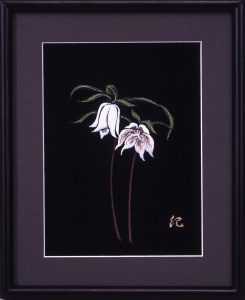
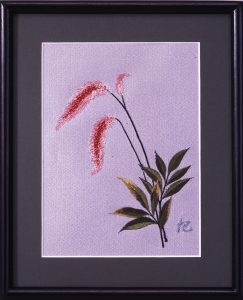
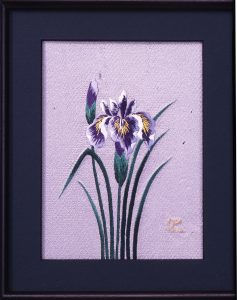
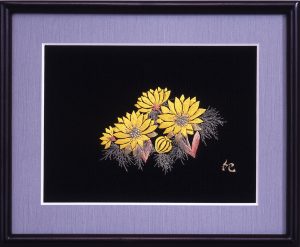
Kiyomi Osawa Gallery
This time, we feature plants again. I still have so much more in my collection. Please look forward to the works in upcoming editions.
コメント