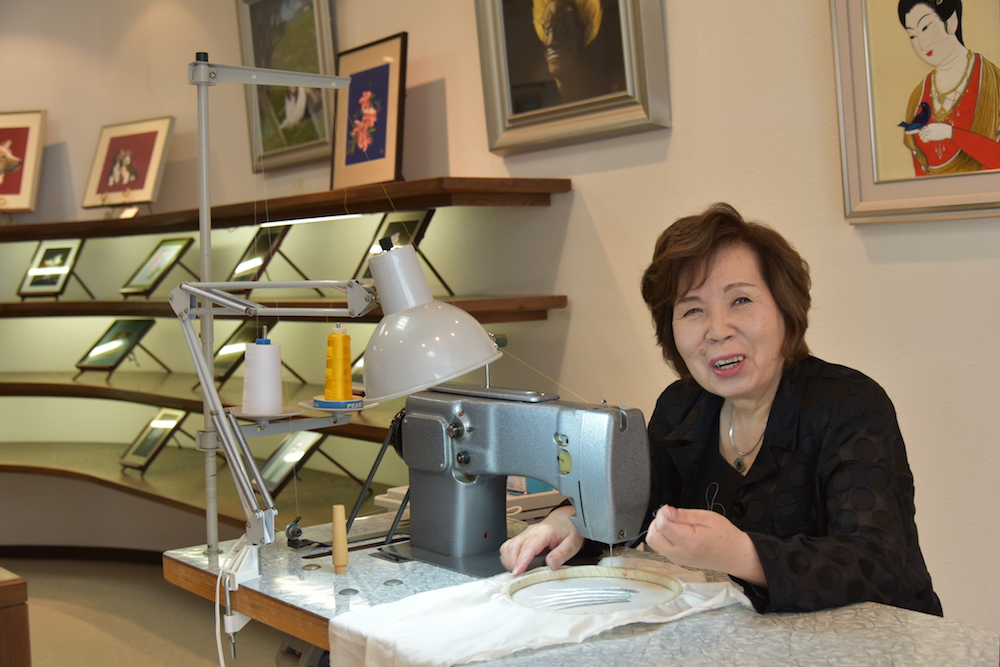
Looking back now, the 1970s were the golden age of prêt-à-porter (high-end ready-to-wear).
The term prêt-à-porter is French, meaning "ready to wear." Until then, ready-made clothing was customarily called "confection," but that term was inseparable from the image of "cheap and shoddy." It is said that a French ready-to-wear manufacturer began using the term in 1949 to dispel that perception.
In the 1960s, designers representing the world of haute couture (custom-made clothing)—such as Pierre Cardin and Yves Saint Laurent—began handling prêt-à-porter as a secondary line, and by the 1970s, prêt-à-porter was driving the fashion world.
During this heyday of the 70s, one of the women who led the prêt-à-porter movement alongside figures like Sonia Rykiel was the designer Emmanuelle Khanh. Having entered the fashion world as a model, she held her first prêt-à-porter solo exhibition in 1964 and was a pioneer who carved out the prêt-à-porter era.
"Ms. Osawa, there is a job from France. Would you be interested?"
The person who suddenly contacted her was a Tokyo-based designer who was entrusted with managing Khanh’s interests in the Far East. He continued:
Khanh creates clothing that boldly incorporates cutwork (a technique of creating lace patterns by cutting out the inside of embroidered fabric). For embroidery destined for Europe, she relies on the master of embroidery, François Lesage. However, lifestyle habits differ between Europe and the Far East. In Europe, people who wear prêt-à-porter do not ride trains; they move about in chauffeur-driven cars, so even bold cutwork does not damage the clothing. In the Far East—especially in Japan—people wearing prêt-à-porter think nothing of riding crowded trains. With bold cutwork, the fabric would twist or, in the worst case, tear. Therefore, the same cutwork could not be used. They were looking for someone in the Far East who could perform cutwork suited to the local lifestyle—someone capable of cutwork on par with Lesage.
Osawa did not know why the designer who contacted her knew of her. However, Emmanuelle Khanh was a luxury brand that wealthy Japanese people were clamoring to buy. To work for that brand, effectively sharing the world stage with Lesage—it would be a shame to refuse.
That was the first thought that crossed her mind.
Besides, Khanh’s prêt-à-porter designs could not be completed without excellent cutwork. Since they had gone out of their way to nominate her, they must have thoroughly researched the embroidery she created. Based on that, they must have judged,
"We can entrust this to Osawa."
In the eyes of Emmanuelle Khanh, she must have been seen as,
"Lesage of the West, Osawa of the East."
She gladly accepted. This was the first time she had worked with a designer considered a world-class superstar. It was around 1978.
The work progressed smoothly, and orders arrived one after another. It was labor-intensive work, and the volume ballooned to a point where she could no longer handle it alone. She outsourced the simple tasks to other embroidery shops, but the parts requiring technical skill had to be done by herself.
Her collaboration with Khanh lasted for six or seven years. It ended only because the cutwork boom faded.
"I learned so much from that work. Moreover, when I later met Mr. Lesage in Paris, he—a man legendary for never letting anyone into his atelier—for some reason showed me not just his workshop, but his entire production process. Perhaps it was a sense of camaraderie, having both worked on Khanh’s projects."
Working with a world-class designer also meant an increase in attention within the fashion industry. Requests began to pour in to Ms. Osawa from many designers. Hanae Mori, known for her haute couture brand, and Yumi Katsura, who made her mark with wedding dress designs and opened Japan's first bridal specialty store, were just a few of them.
"But I had no choice but to decline most of them. After all, jobs were coming in one after another, more than I could possibly handle."
Before she knew it, Ms. Osawa had become the embroidery artisan relied upon by top designers.
Kiyomi Osawa Gallery
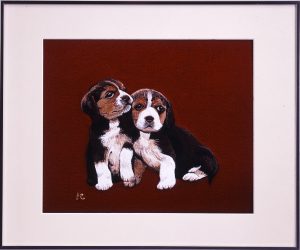
This time, I have collected pieces featuring "fish" and "dogs."
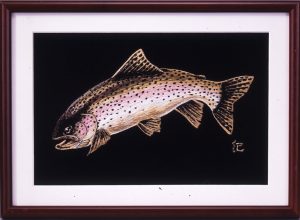
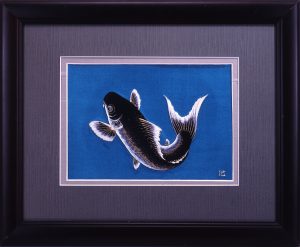
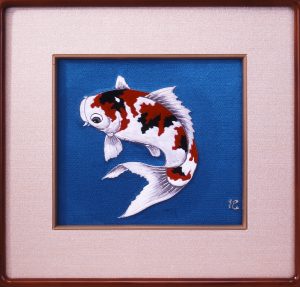
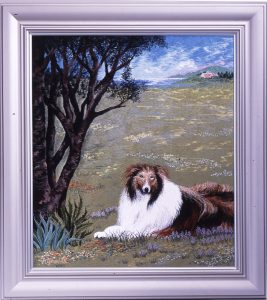
(She has named this piece "Memories.")
コメント