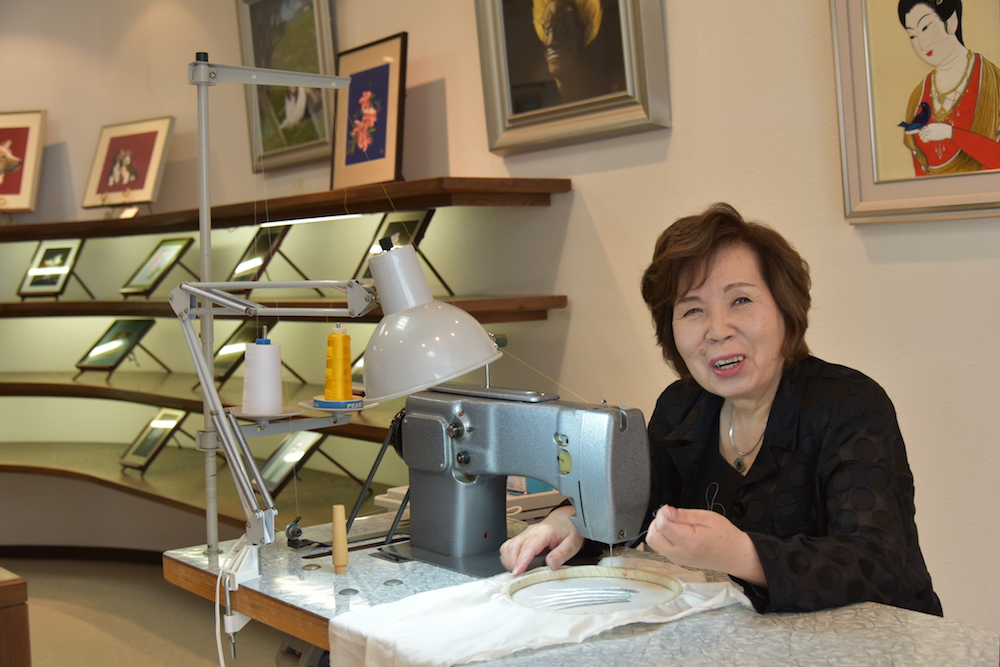
Ms. Osawa's technical prowess, which had allowed her to overtake her senior colleagues in a mere two months, did not stop there. She was a person who was stern with herself.
How can I bring power to the eyes of the embroidery? How can I sew fur so that it looks alive?
She set themes for herself, encouraging herself by saying, "If I can't do it today, then tomorrow; if not tomorrow, then surely the day after," and overcame every challenge. Each time she cleared a hurdle, her skills reached a new level.
"I have nothing left to learn here," she declared, and left her job at just nineteen. In that industry at the time, it was common sense to go independent once you had mastered the craft and could stand on your own feet. As a memento, her workplace gifted her an embroidery hoop.
Two junior female workers from the shop followed her, saying, "Please take us with you." Several young apprentices joined as well. She set up a workshop in her home and installed ten interconnected manual embroidery machines. Her father, Touzaburo, became the president. With the broad network he had cultivated as a buying agent, he took charge of sales. Ms. Osawa was the supervisor on the ground.
She would enter the workshop at 6:00 AM to clean and maintain the machines. Once finished, she would sit before a machine and begin to embroider. Embroidery for haori jackets, for obi sashes, for festive kimono… there was no end to the work. Touzaburo was a highly capable salesman.
Providing technical guidance to the workers who arrived around 8:00 AM was also Ms. Osawa’s responsibility. Wanting them to catch up to her level as quickly as possible, she would sometimes rebuke them in a sharp tone, saying, "You! Look at this, the eyes of the dragon are dead!"
She allocated tasks based on each individual's technical progress and their strengths and weaknesses. She inspected the finished products. If a finish was poor, she would make corrections. The responsibilities of a site supervisor were endless. It was at least 10:00 PM when Ms. Osawa left the workshop, and on most days, it took until 1:00 or 2:00 AM. She was far busier than when she had been an employee.
"I have a unique constitution where I'm fine with very little sleep. Even now I sleep for about six hours, but when I was young, four hours was enough."
Led by Ms. Osawa—whose speed and quality of work were unrivaled by anyone at her former workplace—the embroidery group, combined with Touzaburo's skillful salesmanship, saw their business expand rapidly. By the time they incorporated just one year later, the number of workers had grown to twenty. The orders flooded in so fast that they required that many hands to complete.
She gave the workers the tasks of sewing exactly according to the drafts prepared by the clients. "This would be better with a little extra touch, rather than just following the draft," she would think, and sew those herself. "You see, embroidery loses its movement if you just sew it according to the draft. That's why you have to add that special touch that only embroidery can provide."
In other words, she handled all the difficult work by herself. Even so, "I was sewing a third of all the work we received," she recalls.
Starting a business at nineteen, before even reaching adulthood, in a craft she considered her true calling—and seeing the business expand smoothly. It looked like a life of plain sailing. However, while chasing the daily work, after a while, Ms. Osawa's feelings began to grow desolate for some reason.
"This is not the kind of embroidery I wanted to do!" Such words began to rise from the depths of her heart. A part of her agreed, nodding in response. "I don't want to sew 'prescribed' embroidery. I want to create works of art with embroidery." The compelling thought surged within her.
However, the orders Touzaburo brought in were all for "prescribed" embroidery. Even if she added some touches to the drafts to make them "Osawa-style," prescribed was still prescribed. It was not that Touzaburo was at fault or that he didn't understand his daughter's heart. At the time, that was simply what embroidery was.
While busily churning out orders, Ms. Osawa began to sew embroidery to be placed in frames. This was an era when, even if people displayed hand-stitched embroidery in frames, it was unheard of to frame machine-stitched embroidery. At first, she chose auspicious designs like cranes or sea bream. Perhaps, looking back, there was a sense of humility somewhere in her, thinking, "This might actually sell."
But soon, as if she had determined her path, Ms. Osawa began to sew portraits with manual embroidery machines. It was likely a world-first attempt. As previously mentioned, the first one she sewed was Kim Novak.
She already had plenty of commercial work. She was already only sleeping about four hours a day. While completely fulfilling that work, she sewed these embroidery portraits for which there were no orders. "It really felt like I was begrudging myself the time to sleep." Even so, Ms. Osawa's feelings were not easily cleared.
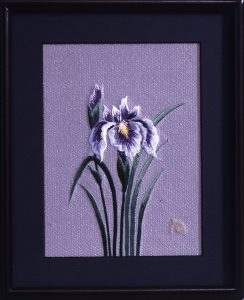
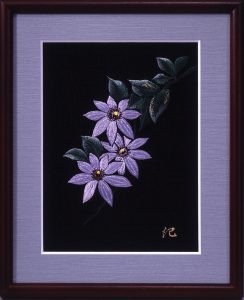
Kiyomi Osawa Gallery
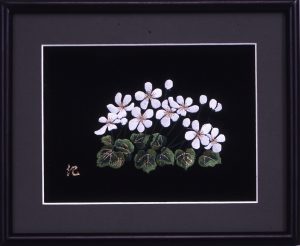
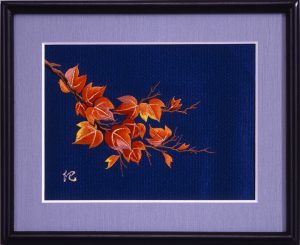
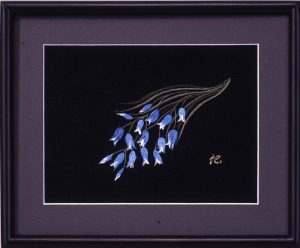
Here are more plant embroideries. I believe that the world of "beauty" created by Ms. Osawa has begun to permeate your heart by now…
コメント