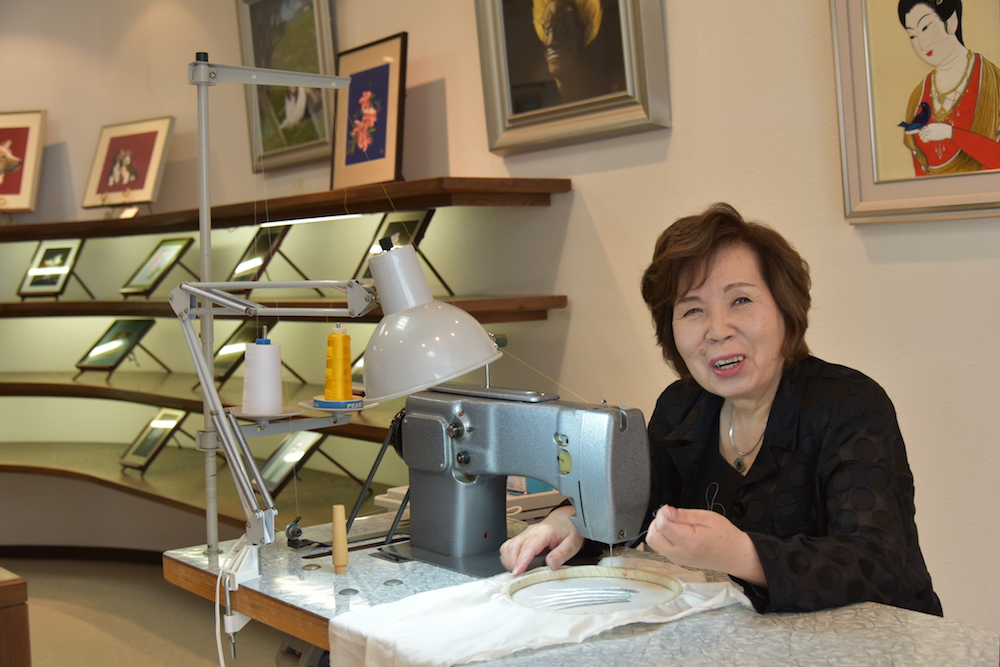
She continued to sew portrait embroidery at a pace of three or four pieces a year, starting with Kim Novak. As mentioned in the third episode, the orders increased day by day, and her name began to rise as a portrait embroidery artist.
Even so, she could not stop her heart from growing desolate.
"I think it was probably the conflict with my father."
Touzaburo was not an artist; he was a highly capable manager. While he allowed his daughter—an employee—to sew portrait embroidery and even promoted them in his sales efforts, the bulk of the company's profits came from the commercial embroidery orders they received.
"Kiyomi, don't just mess around with portraits. Hurry up and finish the orders we've taken."
She was reprimanded time and time again.
"What I want to do isn't just ordinary embroidery that you can find anywhere. I want to sew works that only I can create."
She lost count of how many times they repeated the same argument, even if the wording changed. Admittedly, her father was right. As a company, they had to generate profit first. It was Ms. Osawa who always backed down.
She would sit in front of the sewing machine with a heavy heart to begin the commercial work. Because her heart wasn't in it, she couldn't focus. It took longer, and the finish lacked sharpness.
"This is a failure. I'll re-sew it tomorrow." Thinking this, she would cast the embroidery aside in the workshop, but Touzaburo began delivering them to the clients without her permission. She understood in her head that the deadline had likely arrived, but her pride was wounded, and her frustration built up: "How could he give such a failure to a customer?"
Her feelings grew even more desolate. "I just started to hate everything and abandoned my work."
It was about six or seven years after starting the business. Ms. Osawa was a "playing manager" on the ground. She didn't just do the embroidery herself; at this time, she was distributing work while watching the skills and personalities of about 50 workers, inspecting the finished products, and teaching new workers from scratch.
That playing manager lost her motivation. Things that should happen in a company began to occur.
"The girls started to quit. Some were scouted away. They probably looked at me in my roughened state and were tempted by invitations saying, 'Ms. Osawa’s place won't last long. Why don't you come to us instead of working somewhere that might go under at any time?'"
Orders also visibly decreased. She felt less and less motivated.
When things go wrong, they tend to pile up. A promissory note issued by her father, Touzaburo, was dishonored.
Although it was a company started jointly by Ms. Osawa and Touzaburo, she had left the management entirely to him. Touzaburo had never taught her anything about management, either. The dishonored note came as a complete bolt from the blue for her.
"When I questioned him, he said that a teacher from his brother's junior high school days had come crying to him, and he had issued the note in exchange for lending them money. He said that if that wasn't repaid and we didn't buy back the note, it would impact the company's management."
She also learned for the first time that, with the expansion of business, her father had borrowed a large amount of equipment funds from financial institutions with the house and land as collateral. If the note could not be bought back, the house and land would be taken by the financial institution, and the entire family would be thrown out.
"As I listened, it all started to feel ridiculous. After all, I had been working this hard, yet such things were happening behind my back, right? I completely lost the will to work."
Ms. Osawa stopped doing any work her father brought in. She abandoned the management of the workshop. For the three years that followed, she did only what she loved. She became even more deeply immersed in creating "works" that only she could make.
The company fell into disarray. When things go wrong, they pile up. The day after returning to Kiryu with a souvenir from China given by Mr. Aiichiro Fujiyama, her father passed away. It was fulminant hepatitis. The company, now without a president, was driven to dissolution. This was in 1972.
While she was basking in the spotlight as a bridge between Japan and China by working on a portrait of Premier Zhou Enlai, Ms. Osawa was, on the other hand, standing on the edge of a precipice.
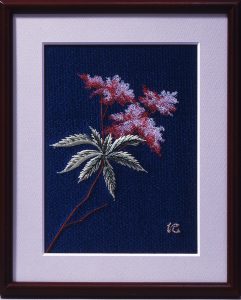
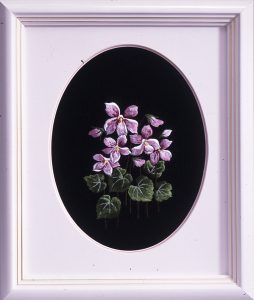
Kiyomi Osawa Gallery
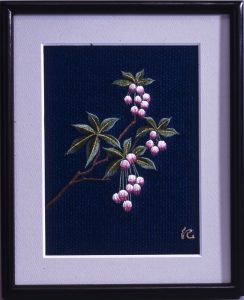
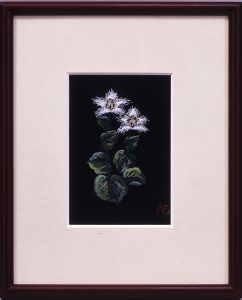
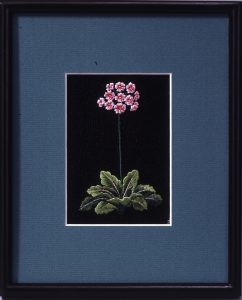
The plant series, which captures various flowers through Ms. Osawa's sensibilities and techniques, is also nearing its end. Please enjoy this edition to your heart's content.
コメント